
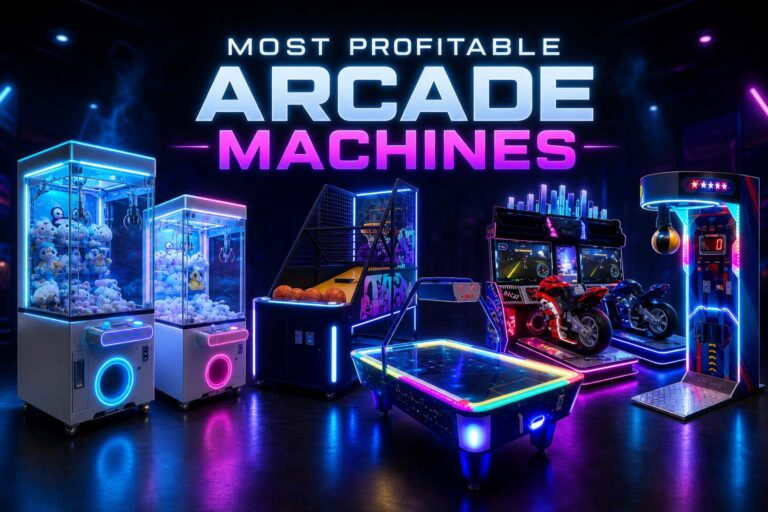
When many people enter the arcade machine business, one of the most common mistakes is to look for a “hot machine list” and buy everything on it.
But in reality, there is no such thing as the “most profitable arcade machine” for every business. There is only the machine combination that best fits your venue.
To achieve real profitability, you need to understand one core formula:
Profitability = Machine Characteristics × Venue Attributes
Simply put, every arcade machine has its own “personality” and target audience. This guide will help you evaluate the real earning potential of different arcade machines and find a more suitable machine mix for your business.
How to Choose the Right Arcade Machine: Match Your Venue, Customers, and Budget
Choosing the right machine is often more important than choosing the most expensive machine, because what truly determines your return is usually not the machine itself, but whether it fits your venue, customers, and budget.
To avoid machines that “look popular but do not really make money,” you can first think through the following three questions.
01 Venue Fit
Different venues have completely different consumption patterns.
The same arcade machine may keep generating revenue in the right location, but struggle to perform in the wrong one.
You can first evaluate machine selection based on your venue type:
Family Entertainment Centers / FECs
This is a parent-child entertainment environment.
Recommended machines: redemption games, claw machines, kiddie rides, basketball arcade machines.
Expert advice: In this type of venue, the key is not how high the single-play price is. The real focus is whether children want to play repeatedly and whether parents are willing to continue paying.
Bars / Breweries / Adult Social Spaces
The focus here is interaction, competition, and atmosphere.
Recommended machines: Golden Tee, classic multicade cabinets, air hockey, basketball arcade machines.
Expert advice: Adults are more willing to pay for games they can enjoy with friends. Machines with short playtime, strong competition, and social interaction often encourage repeat spending.
Shopping Malls / Cinema Lobbies / Tourist Attractions / High-Traffic Areas
These venues depend heavily on first-glance attraction.
Recommended machines: VR simulators, racing simulators, shooting arcade games, prize machines.
Expert advice: In these environments, customers often decide within just a few seconds whether to stop or keep walking. Lighting, sound, appearance, and visual impact are extremely important.
Restaurant Waiting Areas / Small Retail Stores / Laundromats / Hotel Lobbies
Space is limited, so machines need to be compact and stable.
Recommended machines: small claw machines, mini basketball machines, capsule machines, kiddie rides.
Expert advice: Small spaces are not suitable for overcrowding with machines. It is better to choose machines that take up little space, are easy to operate, require light maintenance, and can create smooth additional income.
02 ROI Calculator: Do Not Only Look at Revenue
Do not simply believe claims like “you can recover your investment in a few months.”
A more practical way to judge whether a machine is worth buying is to calculate how much money it can actually leave after costs.
You can use this simplified formula:
Estimated Monthly Net Profit =
Average Daily Plays × Price Per Play × Business Days
- Prize Cost
- Maintenance Cost
- Venue Rent / Revenue Share
- Other Operating Costs
Par exemple:
40 plays per day × $1.50 × 30 days = $1,800 monthly gross revenue
But remember: gross revenue is not the same as net profit.
What truly affects your payback speed is often the following costs:
Venue revenue share / rent: Some locations take a high percentage, so this must be confirmed in advance.
Prize cost: This is especially important for claw machines, because prize cost directly affects profit margin.
Maintenance cost: Repair frequency, part replacement, and after-sales response all affect long-term earnings.
Payment processing fees: Card payments, QR code payments, and cashless systems may create ongoing transaction fees.
Electricity / installation / transportation: These costs may look small, but they can add up over time.
03 Hidden Cost Insights
Many beginners underestimate not the purchase price, but the ongoing “soft costs” that happen after the machine is installed.
Different machine types have different hidden costs.
1. Claw Machines / Prize Machines
On the surface, revenue comes from coin or card payments. But in reality, profit depends heavily on prize purchasing, restocking frequency, prize attractiveness, payout rhythm, and claw strength settings.
If the prizes are too expensive, profit will be reduced. If the prizes are too poor, customers may not want to keep playing.
2. VR Machines / Racing Simulators / Large Interactive Machines
These machines are highly attractive, but the cost is usually not limited to the purchase price. They may also involve software updates, part replacement, maintenance difficulty, and higher venue requirements.
A machine may look impressive, but that does not mean it is suitable for every location.
3. Redemption Games
For this type of machine, you cannot only look at the machine itself. You also need to consider the ticket system, prize inventory, prize display, and daily management.
In many venues, the problem is not that the machine does not make money. The real issue is that the prize redemption area is not well managed, which affects the overall experience and repeat play rate.
4. Classic Arcade Machines / Older Machines
Some machines have a low purchase cost, but later they may create problems such as hard-to-find parts, inconvenient repair, difficult maintenance, or insufficient technical support.
If you do not have stable maintenance support, these machines may become more troublesome over time.
Profit Potential Comparison of 10 Arcade Machine Categories
This section analyzes each type of arcade machine using the same criteria: revenue potential, key profit drivers, suitable venues, maintenance difficulty, and practical operating considerations.
It should be noted that “most profitable” is never a fixed answer. A common industry reference is that a single arcade machine may generate around $250 per week on average, but actual performance can vary greatly depending on foot traffic, location, pricing, prize strategy, machine condition, and operating ability.
Therefore, the ranges below are better used for comparison, not as guaranteed income.
1. Claw Machine

Estimated monthly revenue potential: around $1,000–$3,000+
Key profit drivers: prize appeal, prize cost control, claw strength settings, payout rhythm, machine placement
Best suited for: shopping malls, cinema lobbies, family entertainment centers, supermarket entrances, tourist areas
Maintenance difficulty: low to medium
Insider advice / risk reminder:
The core of a claw machine is not only the machine itself, but whether the prizes make people want to play again. If the prizes are too ordinary, the conversion rate will be low. If the prizes are too expensive, the profit will be reduced.
A more stable approach is to regularly change prize themes, control prize levels, and place the machine in a high-exposure location. In practical operation, high-traffic locations and attractive prizes are often more important than simply raising the price per play.
2. Redemption Games
Estimated monthly revenue potential: around $1,200–$3,500+
Key profit drivers: repeat play rate, ticket reward design, prize counter appeal, player stay time
Best suited for: family entertainment centers, full-scale arcades, children’s entertainment areas
Maintenance difficulty: medium
Insider advice / risk reminder:
The advantage of redemption games is that they easily create a “one more try” cycle. But real profitability does not only depend on the game itself. It also depends on how the redemption area is managed.
If the ticket payout is too high, profit becomes thinner. If the prize area is weak, customers lose motivation. In real arcade operations, machine revenue, prize display, and redemption experience should be evaluated together.
3. Basketball Arcade Machine

Estimated monthly revenue potential: around $700–$1,800+
Key profit drivers: easy to play, strong competition, good for group viewing, high repeat challenge rate
Best suited for: family entertainment centers, mall entertainment areas, bars, school areas, cinema lobbies
Maintenance difficulty: low to medium
Insider advice / risk reminder:
The advantage of a basketball arcade machine is that the rules are simple and almost no instruction is needed. When someone is playing nearby, it can also quickly create an active atmosphere.
It may not always have the highest single-machine revenue ceiling, but it is usually stable, durable, and suitable for many types of venues. For venues targeting a broad customer base, this type of machine is often more practical than some complex equipment.
4. Air Hockey

Estimated monthly revenue potential: around $600–$1,500+
Key profit drivers: two-player interaction, strong viewing effect, obvious social value, fast turnover
Best suited for: bars, family entertainment centers, mall entertainment areas, youth social spaces
Maintenance difficulty: medium
Insider advice / risk reminder:
The biggest advantage of air hockey is its strong social nature. It is especially suitable for situations where people come together, such as friends hanging out, couples on dates, or family entertainment.
It may not stimulate spending through prizes like a claw machine, but it is very useful for increasing customer stay time and improving the overall atmosphere of the entertainment area.
5. Racing Simulator

Estimated monthly revenue potential: around $800–$2,500+
Key profit drivers: immersive experience, strong visual appeal, side-by-side linked play, strong presence
Best suited for: shopping malls, cinema lobbies, large arcades, tourist entertainment spaces
Maintenance difficulty: medium to high
Insider advice / risk reminder:
The advantage of a racing simulator is that it can attract attention at first glance. It works well as a “front-facing attraction” or main visual machine.
However, the challenges are also clear: it requires more space, higher purchase cost, and more complicated maintenance. Therefore, it is more suitable for high-traffic venues or entertainment spaces that need to look lively and visually impressive.
6. VR Arcade Machine
Estimated monthly revenue potential: around $800–$3,000+
Key profit drivers: strong novelty, unique experience, easy to create buzz, higher price per play
Best suited for: shopping malls, cinema lobbies, themed entertainment spaces, tourist entertainment projects
Maintenance difficulty: haut
Insider advice / risk reminder:
VR machines are most suitable as eye-catching experience machines, especially in venues with many young people or tourists.
The risk is that not every location is suitable for high-ticket experiences. If the venue is mainly for quick impulse spending, such as a restaurant waiting area or small shop, VR may not generate orders as easily as claw machines or small prize machines.
7. Shooting Arcade Game
Estimated monthly revenue potential: around $700–$1,800+
Key profit drivers: immersive feeling, fast pace, good viewing effect, suitable for quick decision spending
Best suited for: cinema lobbies, shopping malls, full-scale arcades, youth entertainment areas
Maintenance difficulty: medium
Insider advice / risk reminder:
Shooting arcade games are usually suitable for locations where people can immediately understand the gameplay as they walk by. The gameplay is direct, and the visuals and sound can easily attract passersby.
However, if the venue mainly targets young children or family-friendly light entertainment, it may not be more suitable than basketball machines, kiddie rides, or redemption games.
8. Classic / Multicade Cabinet
Estimated monthly revenue potential: around $300–$1,000+
Key profit drivers: small footprint, simple operation, nostalgic appeal, suitable for supplementary layout
Best suited for: bars, restaurants, small game areas, retail stores, hotel public areas
Maintenance difficulty: low
Insider advice / risk reminder:
The strength of this type of machine is not explosive revenue. Its value lies in relatively controllable cost, small-space suitability, and easier maintenance.
If your venue has limited space, or if you want to start testing the business with only a few machines, this type of machine is often a more stable option than large simulators.
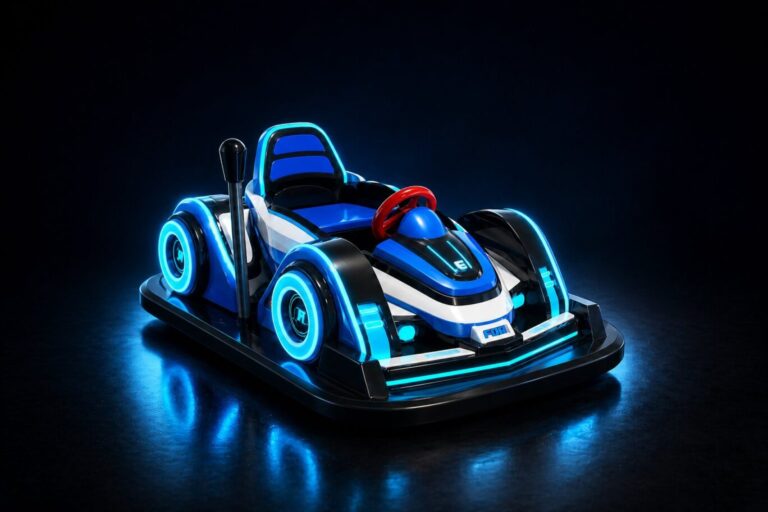
9. Kiddie Ride
Estimated monthly revenue potential: around $300–$1,200+
Key profit drivers: strong parent-child demand, waiting-time spending, extremely low operation barrier
Best suited for: shopping malls, family stores, family entertainment centers, restaurant waiting areas, supermarket entrances
Maintenance difficulty: low
Insider advice / risk reminder:
Kiddie rides are usually not the “highest profit king,” but in venues with strong parent-child traffic, they can be very stable.
When parents take children shopping, waiting for a table, or resting, this type of machine can easily create impulse spending. The key is that the design must be attractive and the placement should be close to parent-child traffic flow.
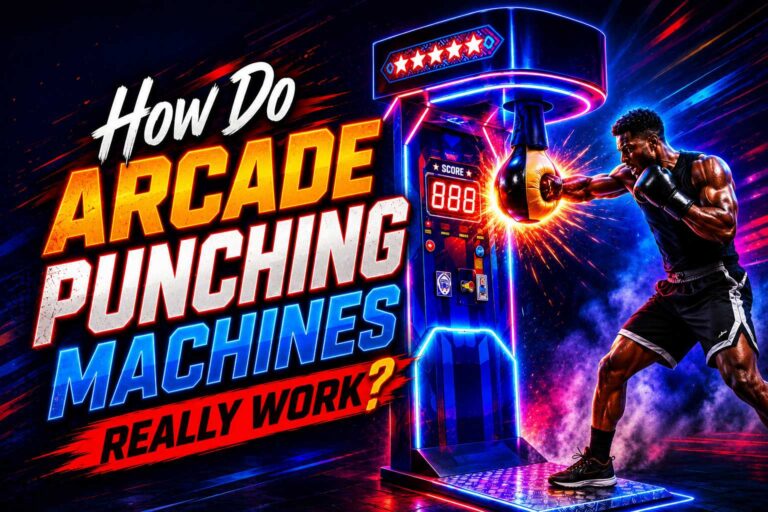
10. Boxer / Strength Tester

Estimated monthly revenue potential: around $400–$1,200+
Key profit drivers: challenge feeling, strong social sharing potential, high acceptance among male customers, good viewing effect
Best suited for: bars, adult entertainment areas, youth social spaces, event venues
Maintenance difficulty: low to medium
Insider advice / risk reminder:
This type of machine has strong impulse-spending characteristics, especially when friends challenge each other.
However, it depends heavily on venue atmosphere and is not suitable for every commercial environment. If your customer base is mainly families or young children, this type of machine usually should not be the first choice.
How Should You Understand the Recommended Order of These 10 Machine Types?
From the overall performance of most commercial locations, these machines can usually be divided into three groups.
Group 1: Most Worth Considering First
- Claw machines
- Redemption games
- Basketball arcade machines
These three types share several advantages: broad audience, simple rules, high repeat play rate, and strong venue adaptability.
If you are entering the arcade business for the first time, or if you want to reduce trial-and-error costs, this group is usually the best place to start.
Group 2: Suitable as Core Attraction Machines
- Racing simulators
- VR machines
- Shooting arcade games
These machines are more like “visual anchors” for the venue. They are suitable for high-traffic and experience-driven locations.
They can quickly attract people to stop, but the purchase and maintenance pressure is usually higher.
Group 3: Suitable for Supplementary Income and Better Machine Mix
- Air hockey
- Classic multicade cabinets
- Kiddie rides
- Boxer / strength testers
The value of this group is usually not that each machine is the strongest revenue generator. Instead, they help complete the customer mix, improve traffic flow, extend stay time, and make the whole entertainment area feel more complete.
Beyond Machines: Improve Revenue Through Operations
Many business owners think that buying the right machines means they are already halfway to success.
But in reality, the same group of machines can produce very different revenue depending on placement, combination, and operation.
“What Doubles Profit Is Not Only the Machine Itself”
What truly separates high-performing venues from average ones is usually not just “what machines you bought,” but how you place them, how you combine them, how you run activities, and how you adjust based on data.
In other words, whether an arcade machine can make more money depends not only on purchasing ability, but also on operating ability.
1. Traffic Flow Planning: Do Not Let Popular Machines Only Guard the Entrance
Many people like to place the most eye-catching machines directly at the entrance, such as VR machines, racing simulators, and shooting arcade games.
This does help attract attention. But a more mature approach is often not to let them “guard the door,” but to let them “lead the way.”
A better layout logic is:
Entrance area: quick-decision, easy-to-play machines
Middle area: interactive machines with longer stay time
Core area: the most attractive large experience machines
You can consider this zoning logic:
Entrance area: small claw machines, small prize machines, mini interactive machines
Middle area: basketball machines, air hockey, redemption games
Core area: VR machines, racing simulators, shooting games, large experience machines
Logic:
If high-popularity machines are placed deeper inside the venue, customers need to pass by other machines before reaching them. This means you are not only earning from one machine, but also creating spending opportunities along the entire traffic path.
2. Machine Combination Strategy: Turn Machines Into a Closed Loop
Whether a single machine can make money is important.
But from the perspective of total revenue, it is even more important whether machines can drive traffic to each other.
Do not completely scatter popular machines. Instead, design the layout around customer behavior: after playing one machine, what machine would they naturally want to play next?
Useful combinations include:
Claw machine + prize display area: strengthens the impulse of “I want to try too.”
Basketball machine + redemption area: extends challenge time and increases the desire to continue playing.
Air hockey + bar / social area: strengthens interaction and atmosphere.
VR / racing simulator + light interactive machines nearby: allows high-attraction machines to drive revenue for the surrounding area.
Logic:
When players feel achievement from a basketball machine, see someone winning a prize from a claw machine, or notice attractive prizes in the redemption area, they are more likely to think, “Let me play one more round.”
A good layout does not let each machine earn separately. It allows machines to lift the overall revenue of the whole area together.
3. Competitions and Events: Turn Passersby Into Returning Customers
If you only rely on natural foot traffic, machine revenue may remain stable, but it is hard to keep growing.
To push performance further, one effective method is to run simple, low-barrier, repeatable activities.
You can consider:
Golden Tee: weekly or monthly tournaments
Air hockey: two-player challenge events
Basketball arcade: high-score leaderboard activities
Claw machines: seasonal prizes or limited-time events
Redemption area: weekend redemption days, double-ticket periods, holiday rewards
Logic:
The purpose of regular events is not only to increase short-term revenue. More importantly, they give customers a reason to come back next time.
Once customers form a habit of joining these activities, your venue is no longer just a place with machines. It gradually becomes a social entertainment space with expectation and repeat visits.
4. Data-Driven Maintenance: Do Not Wait Until a Machine Stops Making Money
In many venues, the problem is not that the machine selection was wrong. The real problem is that the machine’s performance has already declined, but no one noticed in time.
An effective approach is not to wait until the machine completely cools down before replacing it. Instead, check data regularly and adjust early.
You do not necessarily need a very complicated system, but at least you should keep tracking these signals:
- Which machine’s revenue has recently dropped
- Which machine has more frequent failures
- Which machine has players but low revenue per play
- Which machine has high prize cost and reduced profit
- Which machine gets enough exposure but has weak conversion
Operational perspective:
Sometimes the problem is not the machine itself, but the price, ticket settings, placement, prize attractiveness, or machine condition.
Timely small adjustments are often more effective than waiting until revenue drops to the bottom. In many cases, simply changing the location, adjusting the price, or improving the prize strategy can create obvious revenue improvement.
A practical execution method can be very simple:
- Check single-machine revenue once a week
- Compare machine ranking changes once a month
- If performance drops, first adjust price, location, or prizes
- If performance stays low, then consider replacing the machine or moving it to another area
- Repair broken machines quickly and do not let them occupy space for too long
Conclusion
By now, you may have already realized one thing: in this industry, the most expensive machine is not necessarily the most profitable one, and the hottest machine is not necessarily the best fit for you.
In 2026, arcade operation is no longer about simply buying more machines and hoping for results.
Whether you want to add extra income to a restaurant or build a large entertainment center, the core principle is always the same:
Match the machine’s personality closely with the venue’s characteristics.
The higher the match, the lower your depreciation risk and the shorter your investment payback period.

 English
  Español
  العربية
  Français