
As a parent, when you walk through a mall or amusement park and spot that Le Bar Car (360 rolling car) flipping and spinning 360°, your first thought probably isn’t “That looks fun!” but “Is that safe?”
Will it spin too fast?
Will my child get scared or dizzy and sleep badly at night?
Will staff be watching the whole time? If my child panics and wants to get off, what happens?
Videos online look exciting and cool, but when it’s your child in the seat, what you really care about is:
Is this ride suitable for my child’s age and personality?
Is the safety design really reliable?
If these are your worries, you’re in the right place. This Le Bar Car safety and experience guide is written for parents like you—those who want to give their kids a little thrill, but are absolutely unwilling to gamble with safety.

Is Le Bar Car Kid-Friendly?
If you just want a one-sentence conclusion: overall, Le Bar Car–type 360° rolling rides are designed for families and parent–child use and are suitable for most school-age children when accompanied by adults.
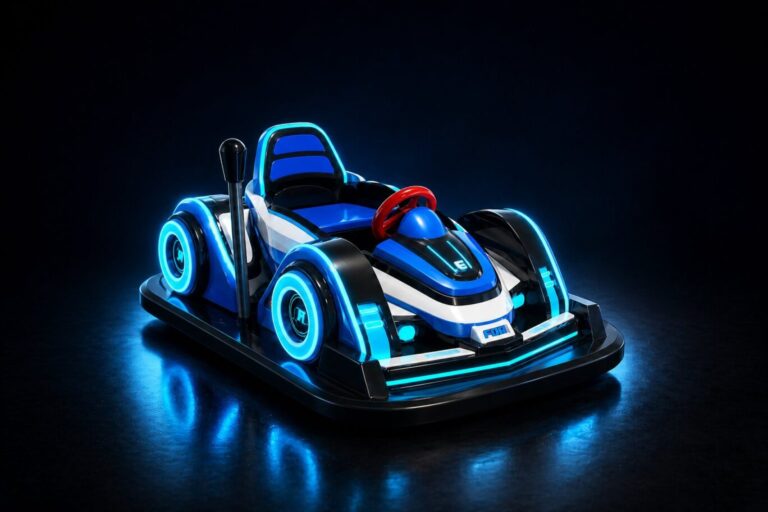
As the manufacturer of Le Bar Car, here’s the truth: Le Bar Car typically uses a steel frame plus an integrated body made of engineering plastic or fiberglass. Seats come with safety belts; there are padded side rails; speed and rotation are controlled by both programmed settings and manual controls. Some models are equipped with extras such as radar-based anti-collision systems. All of this is designed to keep risks as low as reasonably possible while still being fun.
However, “suitable for children” does not mean every child at any age can ride it in the same way.
Whether it’s right for your child depends on a few key factors:
Does your child meet the venue’s minimum age and height requirements?
Is your child the type who enjoys thrills, or more sensitive and easily scared?
Does your child have any issues like motion sickness, vertigo, or heart/cardiovascular problems?
Does the operator actually enforce rules—checking that seat belts are tight, controlling speed, and managing the flow of people and cars in the area?
Different manufacturers and venues may have slightly different models and control settings, so the experience can vary.
In the rest of this guide, we’ll walk through, in parent-friendly language:
The core safety features of Le Bar Car
Recommended age and height ranges
What details to look for on-site
What you as a parent can do before and after the ride
The goal: make this “flipping adventure” both exciting and reassuring.
Le Bar Car 360 Safety Features: A Detailed Look for Parents
1. Restraint System: More Than Just a Seatbelt
Most 360° Le Bar Car rides use a combination of seat design + safety belt for protection.
Common designs include:
Seat belts made of automotive-grade webbing
Locking buckles with “ratchet” or locking structures that tighten and lock if pulled suddenly (for example during a sudden stop or rotation)
On some models, an additional horizontal bar across the waist or thighs so that even during inversion or large-angle flips, the rider is firmly “hugged” by the seat
For parents, the simplest on-site check is:
Look at the belt: is it intact, with no fraying or obvious damage?
Once buckled, gently pull outward—do you feel it “getting tighter as you pull,” instead of sliding loose?
If yes, that’s a good sign.
2. Vehicle Structure and Materials
Le Bar Car usually uses a steel frame + fiberglass (FRP) shell. Inside is the load-bearing steel structure; outside is a smooth, rounded shell with side bumpers to spread out impact forces in minor bumps.
The large wheels are part of the structure: big diameter + low center of gravity. Compared with tall, slender “air rides,” this ground-hugging flipping ride has an inherent advantage in structural stability.
During design, legitimate manufacturers will:
Round off sharp edges
Thicken seat backs and padding
This reduces the chance of kids hitting hard edges when the ride shakes. These are safety details you can see directly with your own eyes on-site.
3. Operator Controls and Safety Overrides
On the operator side, most Le Bar Car installations have a dedicated control panel or remote. Staff can:
Start and stop all vehicles
Set or adjust speed
In many models, use an emergency stop button that immediately cuts power so all cars gradually come to a halt if a child feels unwell or something unexpected happens in the ride zone.
On-site, you can quickly check three things:
Is there a dedicated staff member standing at the controls or near the ride area at all times (and not walking away while the cars are still running)?
Is there a clearly visible red emergency stop button on the console or control box?
Before starting, do staff individually help each child fasten their belt and give basic safety reminders?
4. Floor and Ride Zone Safety
The final layer of protection is the ground and ride area layout.
Standard practice includes:
Non-slip flooring or rubber mats in the ride area
Fencing or barriers around the zone so only riders may enter, preventing nearby kids from being knocked over by a passing wheel
A clear, wide entrance/exit route for safe boarding and disembarking
Flat, obstacle-free flooring so the car won’t be blocked or jolted by objects on the ground during operation
Overall, reputable manufacturers design this kind of 360° ride according to international amusement ride safety standards, including full structural and load calculations. They layer four protections:
“Securely restrained riders” + “Strong and stable vehicle” + “Controllable operation” + “Safe, friendly venue”
If you get into the habit of checking four things on site—seat belt, vehicle body, control station, and floor area—you can quickly estimate whether this particular Le Bar Car is something you’re comfortable letting your child ride.
What’s the Right Age for the Le Bar Car?
(Based on Real-World Experience)
First, an important point: for safety, amusement venues care more about height and physical condition than just age.
For many spinning or family rides, the minimum height is around 90–110 cm, with more intense rides going up to 120 cm—roughly corresponding to children aged 4–8 and above.
Based on typical practices and real parent feedback, here is a reference guide to help you quickly place your child:
| Age Group | Recommendation | Reasons & Notes |
|---|---|---|
| 3–5 years | Cautious recommendation | For safety and emotional readiness, only a small number of kids in this range are truly suitable: those who meet height requirements and love thrills. Adult co-riding is strongly recommended. Let them watch a few rounds from the side first; if they look scared just watching, don’t push it. If the child doesn’t meet the venue’s minimum height (many start at 100 cm), don’t insist. Even if they barely qualify, the belt must be secured tightly, and you should remind them to hold on with both hands. |
| 6–12 years | Recommended age range | Most kids in this range have enough height and understanding—this is the golden age for trying Le Bar Car. Prerequisites: they meet the venue’s height requirement (often 100–120 cm), are in good health, and have no heart, neck, or severe motion sickness issues. For a first ride, opt for lower speed and shorter duration, then watch for signs of discomfort afterward (pale face, dizziness, nausea). |
| 13+ & adults | Generally suitable | As long as there are no medical restrictions (heart disease, severe hypertension, recent surgery, pregnancy, etc.), most teens and adults can ride normally. However, some may deliberately twist, lean, or act out “for fun,” which increases the risk of sprains or bumps. The safest way to enjoy the ride is still: follow instructions, sit properly, and keep the belt secured. |
Extra notes on height and health:
The height chart and health warning signs on-site are the final standards you should follow. Different countries, parks, and models may set slightly different requirements, but most cluster around the 100–120 cm range.
Just because a child “barely meets” the height line doesn’t guarantee it’s a good idea. The younger the child, the higher the overall injury rate on rides. Parental judgment is often more important than that printed line.
Look at this age guide side by side with the venue’s posted height line and health restrictions, and ask yourself:
“For my child, is today the time to just watch and wait—or is it safe enough to try the Le Bar Car 360?”
Real Risks: When Is Le Bar Car Not Suitable for Kids?
Even if the equipment is well-made and certified, incorrect use can turn “fun” into “danger” very quickly.
Safety bulletins and manufacturer recommendations frequently mention the same types of risky behavior: operating in cramped or crowded areas, letting kids control the ride without supervision, ignoring age/height rules, etc.
For 360° Le Bar Car rides, common misuse scenarios include:
Not wearing a seat belt, or wearing one that’s very loose. This makes it easy for a child to slide or be thrown around during sudden acceleration, braking, or minor collisions.
Overloading the car—e.g., two adults plus one child squeezing into a two-seat car. This can exceed the designed load, reduce space to move safely, and make the vehicle less stable during flips.
Playing in unsuitable locations—near stairs, on steep slopes, or next to hard structures. If the car loses control, there’s a greater chance of secondary impact injuries.
Kids sticking their hands out beyond the guard frame, standing up, or trying to jump off before the car fully stops. This is one of the most common causes of injuries on rides in general.
In all these cases, the core issue isn’t that “the equipment is inherently dangerous,” but that it’s not being used according to the rules. Yet it only takes one such mistake to create an unpleasant or even injurious experience.
Operator Mistakes
Accident reports for amusement rides often list operator error as a major cause:
Not checking that belts or restraint bars are fully locked
Abrupt stops at the wrong time
Failing to hit the emergency stop when something obviously goes wrong
For Le Bar Car, typical operator negligence might include:
Not checking every rider’s belt and bar before starting
Not giving first-time child riders a short briefing (“sit like this,” “don’t touch here,” etc.)
Allowing too many cars in too small a space, raising the chance of collisions between cars or with bystanders
Continuing to operate even when seats, wheels, or lights are making abnormal noises or appear faulty
Parents and venue owners can use a simple judgment rule:
Is there a dedicated, attentive staff member? Do they perform careful safety checks and stop the ride decisively when something looks wrong?
If the answer is no, then no matter how safe the equipment is on paper, it’s hard to call the experience truly “kid-friendly.”
Cheap or Uncertified Copies
Aside from genuine Le Bar Car products, the market also has very cheap units that look similar but lack certifications or trustworthy warranties. Compared with branded models that clearly show CE, ASTM, ISO9001 or other relevant safety certifications, these “no-name cars” often cut corners on:
Welding and structural strength (more likely to loosen or crack over time)
Electrical protection (poor overload or short-circuit protection, higher risks of power failure or even fire)
Documentation and after-sales service (no clear manuals, maintenance guidelines, or support when something breaks)
For buyers and venue owners, the risks include:
Higher chance of structural failure after repeated use
Unpredictable behavior in emergency situations
No reliable support if an incident occurs
So when you’re considering whether a specific Le Bar Car is “suitable for children,” don’t just look at appearance and price. Pay attention to:
Clear branding and certifications
Availability of testing reports and conformity certificates
Proper user manuals, maintenance guidelines, and after-sales support
Only when these are in place—combined with correct usage and professional operation—does the ride genuinely qualify as kid-friendly.
If you’re unsure about a product or need professional advice, feel free to contact LeYou; we are an experienced professional manufacturer of Le Bar Car equipment.
What to Expect: A Le Bar Car Ride-Along Experience
If you’ve decided to let your child try Le Bar Car, the full experience typically looks like this:
1. Queueing and Boarding
You line up at the entrance. Staff may:
Measure your child’s height
Ask simple health questions (motion sickness, heart problems, etc.)
Only then will they let you in. When it’s your turn, your child walks up via steps or a ramp. Adults can board together. Choose a car you like, and seat your child where:
The backrest is upright enough
Their feet can rest comfortably
2. Buckling Up and Basic Instructions
Staff will check the seat, belt, and surrounding area for debris. Then they’ll:
Pull the belt across your child
Fasten the buckle
Ask you to help tighten it so your child can’t slide forward
This is a good time to explain things in simple terms:
“The car will move slowly at first and then start to spin. Hold on here with both hands. If you feel bad, tell me right away.”
Many setups have a steering wheel or lever for kids to hold or “pretend steer,” but for safety, real speed and flip control is usually handled by the system and staff. The child’s controls are more about engagement than actual operation.
3. Movement and Flips
Once everyone is ready, the lights may dim a little, colorful LEDs turn on, and music starts playing.
The car usually begins with slow movement to help kids adapt.
Then the system starts the pre-set flipping program. Some rides begin with gentle rocking; others progress to full 360° flips. Overall, the intensity is gradual—it does not usually start with wild flips right away.
During the ride, you’ll likely notice:
The speed is not very fast—more like slow circles than racing
Each flip has a brief “build-up” instead of a sudden violent jerk
The seat and belt “wrap” your child securely, so even when inverted, there’s no real feeling of “falling out”
4. Slowing Down and Getting Off
As the ride ends, the music softens and the cars slow down, eventually stopping in a designated area. Staff:
Release the belts one by one
Remind kids to stand up slowly and not sprint away immediately
Give your child a few seconds to regain balance.
After the ride:
Many kids will be excited and shout “Let’s do it again!”
A few may feel a bit dizzy—that’s normal
You can:
Sit with your child for a few minutes
Offer some water and encourage slow, deep breaths
Ask how they felt—“more fun” or “more scary”?
If they look pale, dizzy, or nauseous, skip a second round and choose something gentler instead.
Experiencing the ride together like this helps you understand your child’s true tolerance and gives you your own sense of how safe and manageable Le Bar Car 360 feels. Next time, you’ll be much more confident in deciding whether to ride again.
Quick Checklist Before Your Kid Rides Le Bar Car
Before you actually join the line for Le Bar Car, you can run through this quick checklist:
1. Height & Age
Does your child meet the posted minimum height?
Are there any explicit age or health restrictions that apply?
2. Health Condition
No recent fever, vomiting, or severe motion sickness
No known heart issues, neck injuries, or recent surgeries that make such rides unsafe
3. Emotional Readiness & Willingness
Does your child want to ride?
If they look very nervous or want to back out while queueing, respect that.
4. Understanding the Rules
In one sentence, confirm they understand:
“Keep your belt fastened, hold on with both hands, don’t stand up, and don’t open the buckle.”
5. Seat Belt & Seat Check
After boarding, personally check:
Is the seat belt intact and properly locked?
Are the seat back, armrests, and car body free from obvious damage or looseness?
6. Venue & Staff
Is there a dedicated operator watching the controls?
Is the floor flat and non-slippery?
Is the ride area properly fenced off from bystanders?
7. First-Time Note
If this is your child’s first 360° flipping ride, let the staff know.
Ask them to:
Do an extra safety check
Keep an extra eye on your child during the ride
You can save this checklist in your phone notes or print a small card to keep in your bag. Each time you encounter a similar ride, spend 30 seconds going through it, and you’ll be much better equipped to answer the question:
“Is this ride really worth trusting with my child—this time, in this place, with this operator?”
FAQ
Is Le Bar car 360 kid-friendly?
Overall, Le Bar Car 360 is designed as a family and parent–child ride and is suitable for most school-age children when they meet the venue’s height requirement and ride with proper supervision. It has safety belts, padded seats, a stable low-center-of-gravity structure and controlled speed/rotation. However, it’s not for every child: kids who are very young, very fearful, or have health issues like heart, neck or severe motion sickness problems should be more cautious.
What are the specialities of Le Bar car 360?
Le Bar Car 360 uses a steel frame with a fiberglass or engineering-plastic body, plus large wheels and a low center of gravity to improve stability during flips. The seats use automotive-grade belts, locking buckles and sometimes an extra lap bar, with thick padding and rounded edges to reduce impact. Operators can control speed and direction through a control panel, and many setups include an emergency stop button and fenced, non-slip ride zones. Some models also add radar-based anti-collision systems to further reduce risk.
What age is a 360 rolling car (Le Bar Car) for?
For 360° rolling cars like Le Bar Car, venues care more about height and health than strict age, but there is a useful age guideline. Kids aged 3–5 are a cautious recommendation only if they meet the height line, love thrills, and ride with an adult. Ages 6–12 are the main recommended range, as most children are tall and mature enough if they are healthy and don’t have heart, neck or serious motion-sickness issues. Teens and adults 13+ are generally suitable as long as they don’t have medical restrictions and follow the rules.




 English
  Español
  العربية
  Français