Contact Us
5th Floor, No. 32 Xinshuikeng Huancun East Road, Donghuan Street, Panyu District, Guangzhou City, Guangdong Province, China,
+86 17701993025
contact@arcadegamesale.com

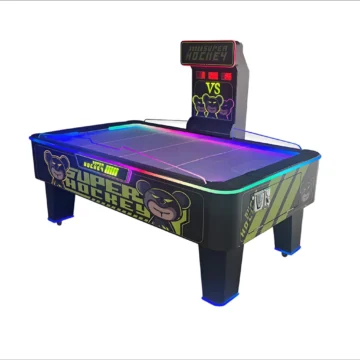


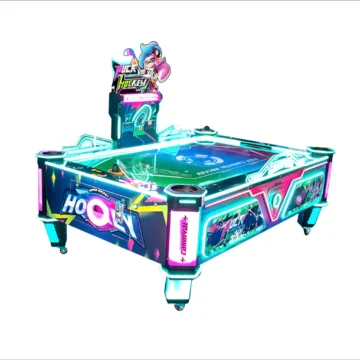
Ideal for: Bars / Family Entertainment Centers (FECs) / Schools / Office Rec Rooms / High-intensity Home Entertainment
Goal: Help you make the right trade-offs between speed, durability, revenue potential, and total cost of ownership (TCO).
Arcade-grade cabinets are built for high-frequency, long-duration use: higher airflow (CFM) for a steadier cushion, thicker playfields and rails to handle aggressive play, and electrical/scorekeeping systems designed for long hours and monetization. Compared with home models, they deliver markedly better durability, parts availability, after-sales support, and upgrade paths. Compared with tournament-style tables, Arcade/Coin-Op models emphasize lighting effects, payment systems, ticket management, and operational convenience.
Bars/Night venues: Prioritize 7–8 ft, LED/UV lighting, low-maintenance surface, noise ≤75 dB.
FEC/Arcades: Choose Coin-Op/card system compatibility, high airflow ≥350–400 CFM, ticket/score integration.
Schools/Offices: Value low noise and safety—aim for ≤70–72 dB, rounded corners/reinforced rails, scratch-resistant surface.
Heavy-use Home: Go Arcade-Style 7–8 ft, ensure enough clearance to avoid “too big to fit” regret.
6 ft: Compact rooms, easy to pick up.
7 ft: Versatile commercial/entertainment standard.
8 ft: Closer to pro speed and foot traffic flow; best for flagship placement.
Space tip: Leave at least 90–100 cm (35–40 in) of clearance on all sides. If passages are tight, consider 7 ft + low-noise blower.
Revenue-first (FEC/Bar): Coin-Op/card reader, ticket integration, reinforced rails, lockable service doors.
Brand & Experience: Focus on lighting (LED/UV), scoreboard visibility, pro-grade pucks/mallets, and spare-parts availability.
Arcade-Style: Entertainment and visual flair; fast play and striking lights—great for bars, offices, and game rooms.
Coin-Operated: Monetization via coin/bill/card, ticket/points systems, heavier-duty parts, service-friendly design—ideal for FECs and bars.
Tournament/Pro: Emphasizes consistent speed, flatness, and rail rebound; pick this if you want competitive feel.
Room measurement: Measure clear length × width; note doors, pillars, stair turns.
Recommended clearance: ≥90 cm (35 in) around the table; ≥110 cm (43 in) if players are larger or you expect spectators.
Traffic & noise: Near cash wraps, kitchens, classrooms, or desks—favor low-noise blowers and isolation pads.
Flooring & delivery: Confirm elevator/corridor dimensions and stair turning radius; schedule professional white-glove delivery if needed.
CFM (airflow) affects hover stability and speed.
Light entertainment: 300–350 CFM
Commercial mainline: ≥350–400 CFM
Tournament/ultimate feel: 400+ CFM
Blower count/type: Single blower is simpler to service; dual can distribute air more evenly. Centrifugal designs are often steadier.
Noise (dB):
Offices/Schools: ≤70–72 dB is comfortable
Bars/FECs: ≤75 dB acceptable
75 dB: pair with acoustic treatment/partitions
Balance tip: Speed vs. quiet requires trade-offs; aim for efficient blowers + optimized porting + anti-vibration feet.
Common supply: 110–120V or 220–240V (50/60Hz).
Typical power: 250–450 W; higher airflow and stronger lighting raise consumption.
Wiring: Dedicated circuit recommended; keep away from heavy-draw devices. Add surge/overload protection.
Energy math (for TCO):
Daily hours × power (kW) × rate = estimated electricity cost
Example: 0.35 kW × 8 h × 30 d × rate ≈ monthly bill
Playfield: HPL (high-pressure laminate) or stainless overlays—scratch-resistant, easy to clean, consistent friction.
Rails/guards: Thick alloy or engineered plastics to absorb high-speed impacts.
Frame/base: Steel cross-members or solid wood frame to resist long-term warping.
Scoring & lighting: LED/UV is energy-efficient, long-life, and low-maintenance.
Coin/bill/card/QR: Choose based on region and audience.
Ticket/points: Integrate with redemption counters or membership to lift replay rates.
Security & service: Quality locks, separate service doors, clean cable runs, and reinforced brackets improve uptime.
Pro pucks & mallets: Weight/thickness/material affect speed and feel; for heavy use, stock up on reinforced, impact-resistant sets.
Lubrication & cleaning: Use dedicated cleaners and low-residue cloths; avoid silicone-heavy household sprays.
Rail guards/feet/covers: Reduce drift and noise, prolong playfield life; covers protect from dust and UV.
Lighting & scoring upgrades: Wider viewing angles and longer throw improve social appeal and crowd engagement.
Weekly: Clear playfield holes/rails; check blower intake for blockages.
Monthly: Check airflow and abnormal noise; tighten fasteners; refresh high-wear items (pucks/mallets/rail guards).
Quarterly: Inspect power cords, connectors, scoreboard; clean blower filters and ducts.
Yearly: Electrical safety check and level calibration; assess blower bearings/seals for replacement.
Packaging/inbound: Note carton size and weight; upstairs or no-elevator sites require two-person (or more) teams.
Placement: Level the cabinet; micro-adjust leveling feet; keep away from large speakers and heat sources.
Acceptance checklist: Flat playfield, steady airflow, working scoring/lighting, smooth coin/card flow, complete consumables.
One-time: Machine price + freight/inside delivery + install/site prep (power/acoustics).
Operating: Electricity + consumables + routine maintenance + downtime risk.
Revenue drivers (Coin-Op): Price per play × plays × occupancy × hours; boost via replay incentives and ticket/member programs.
Optimization: Choose high-efficiency blowers, durable components, and readily available spares to cut annualized costs.
Moderate intense play for minors; keep the surface dry—avoid beverage spills.
Wear grippy shoes; don’t jump/sit on cabinet edges.
If abnormal noise or vibration occurs, power down and inspect.
Bars/Night venues: 7–8 ft + LED/UV + ≤75 dB + reinforced rails + heavy-duty puck/mallet set.
FEC Flagship: Coin-Op/card + ≥350–400 CFM + ticket integration + large-format scoreboard.
Schools/Offices: 7 ft + low-noise blower + rounded guards + cover + basic maintenance kit.
Heavy-use Home: Arcade-Style 7–8 ft + HPL playfield + low-maintenance cleaning kit.
A: Arcade focuses on durability and sustained high-intensity use—higher airflow, reinforced structure, commercial-grade electrical/score modules. Home models are lighter and built for casual sessions.
A: Coin-Op adds coin/bill/card acceptance and ticketing for revenue, with heavier-duty parts and easier service access; Arcade-Style emphasizes entertainment and lighting without payment modules.
A: Space first: keep ≥90 cm (35 in) clearance around. 7–8 ft delivers the “arcade feel”; 6 ft suits tight rooms or family play.
A: Higher CFM improves stability and speed but may increase noise and power draw. For commercial mainline, aim ≥350–400 CFM, and balance with noise/energy.
A: Typically ≤70–75 dB is venue-friendly. Near quiet zones, add acoustic panels, isolation feet, or pick quieter blower packages.
A: Recommended. Use overload/surge protection and avoid sharing with heavy A/V or HVAC loads to reduce trips and interference.
A: Use specialized low-residue cleaners and soft cloths; regularly clear micro-holes and intakes; avoid silicone or harsh solvents.
A: Weekly cleaning, monthly checks, quarterly servicing, yearly electrical inspection. Shorten intervals for heavy-duty venues.
A: Units are large and heavy; book professional white-glove service for carry-in and leveling to ensure safety and performance.
A: For heavy traffic, pick reinforced pucks/mallets. For speed tuning, stock different puck weights/thicknesses to match airflow and venue.
A: Some models support modular add-ons; confirm pre-wired interfaces, power, cable routing, and cabinet cutouts pre-purchase.
A: Start with price per play × plays × occupancy × hours. Layer ticket/member programs and events/tournaments to lift throughput and ARPU.
Choosing the right Arcade Air Hockey Table goes beyond price and looks—balance space, airflow, noise, power, monetization modules, and serviceability. Work through the checklist above and you’ll bring home (or on-site) a table that’s fun, durable, and easy to operate, with costs and experience firmly in your control.

5th Floor, No. 32 Xinshuikeng Huancun East Road, Donghuan Street, Panyu District, Guangzhou City, Guangdong Province, China,
+86 17701993025
contact@arcadegamesale.com
© 2026 LeYou Inc. All Rights Reserved.
 English English
  Español
  العربية
  Français English English Español
العربية
Français
Français English English Español
العربية
Français
We use cookies to make our website work properly and to improve your browsing experience. Click “Accept all” to allow all cookies, or use “Opt-out preferences” to manage your choices. For more details, please see our Privacy Policy.