What are the punching machines called in arcades?
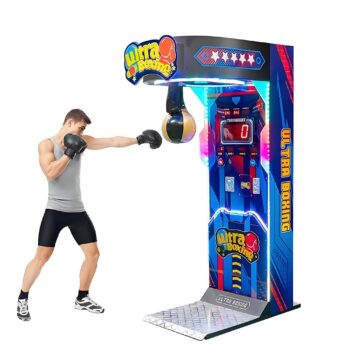
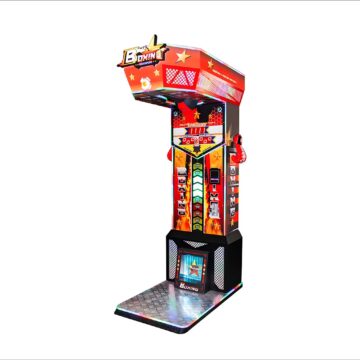
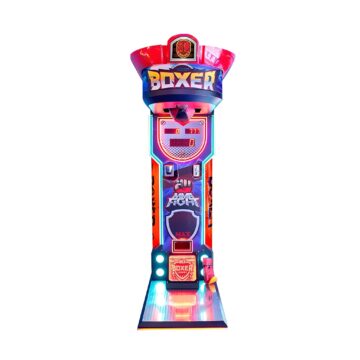
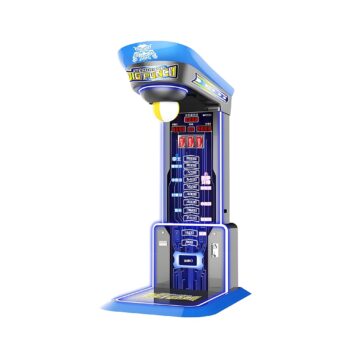
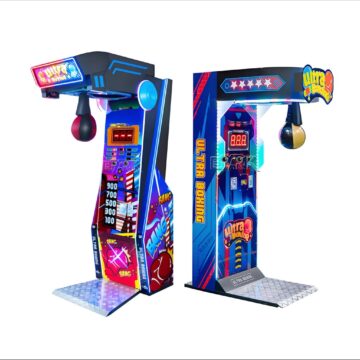
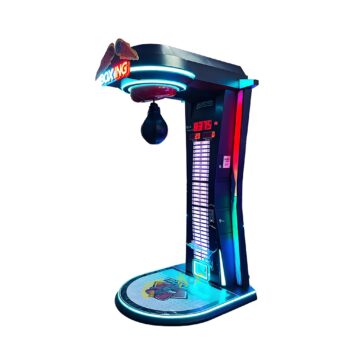
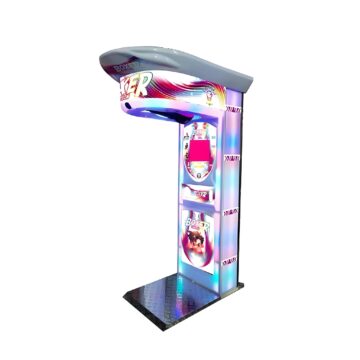
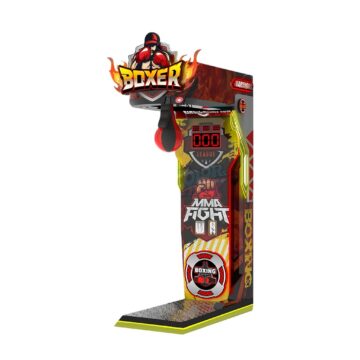
Most people just call them boxing machines. You’ll also hear punching bag machines, punch machines, or boxer arcade machines—all talking about the same game where you hit a hanging bag and the machine shows your score. Popular cabinet names you might see include Boxer Dynamic and Boxer Champion. They take a coin or swipe, you punch the bag, the sensors read the power, and your score flashes on the display.
Are boxing machines any good?
Yes — if you want a fun, quick cardio challenge, they’re great. Hitting the bag raises your heart rate and works your legs, core, shoulders and arms, and can help with balance and hand-eye coordination. Many people also like them for the calorie burn you can get from boxing-style activity.
That said, arcade machines are made for entertainment, not lab-grade testing. Scores can vary a lot between cabinets because of sensors and calibration, so don’t treat the number as a precise measure of “punch power.” And as with any striking exercise, poor technique or no wrist support can lead to aches or injury — wrap up and keep your form tidy.
Bottom line: great for motivation, cardio and friendly competition; not a replacement for a coach or proper boxing training gear if your goal is technique or exact power measurement.
Are boxing machines profitable?
Yes—in busy spots they can do very well, but results depend on placement, price-per-play, and uptime. In many venues, arcade pieces average a few hundred dollars per game per week; boxing machines in good bars, arcades, and FECs often charge $1–$2 per play and can reach dozens to 100+ plays a day when traffic is strong. That can add up to hundreds to over $1,000+ in monthly net for a single cabinet, with standout locations reporting $50–$600 per day during peak times.
-
Location & visibility: entrances, bar counters, waiting areas, and event nights boost repeat play.
-
Price & engagement: $1–$2 per play is common; tournaments/leaderboards or social promos help people play again.
-
Uptime & reliability: a down machine earns $0—simple, sturdy cabinets with quick maintenance win.
Bottom line: place it where people already gather, keep the price simple, promote friendly competition, and keep it running—that’s when a boxing machine pays off.
Why add a Boxing Arcade Game to your venue/store?
Boxing arcade games—also called punching machines or strength testers—stand out for three things: they’re interactive, they draw a crowd, and people love replaying them. A clear score and leaderboard create a simple loop: watch → try → try again.
They fit well in bars, family entertainment centers (FECs), gyms, event rentals, and home game areas. Unlike screen-only games, boxing machines give instant feedback on force and speed and offer a safe outlet for energy, which naturally keeps players longer and increases spend. You may hear people say boxing machines bring “extra revenue” or are “low maintenance.” Those benefits are possible—but you only get them if you choose the right model, put it in the right location, and keep up with simple daily operations. I’ll explain these clearly below.
Choose the right model: grasp the differences at a glance
Prioritize these seven items when selecting: Scenario → Gameplay (ticket redemption / pure challenge) → Payment methods → Sensors & durability → Footprint & noise → Power & certification → Warranty & lead time.
Gameplay / Modes
-
Strength test: single hit scoring, combos/challenges, looping leaderboards; best for bars/nightlife and promotional events.
-
Ticket Redemption: uses tickets to drive repeat play and parent–child interaction; best for FECs/shopping-mall family zones.
Payment / Monetization
-
Coins/bills as standard; optional cashless (card/NFC/QR) and multiple currencies.
-
Pair with time-of-day pricing / combo pricing / bundle pricing (e.g., “3 tries for a better deal”) to lift ticket size at peak times and stimulate play off-peak.
Sensors & Feedback
-
Common setups: mechanical impact / load cell/strain gauge / electronic fusion.
-
Focus on stable readings, abuse resistance, easy maintenance; LED/LCD displays should clearly show force/speed/combos.
Footprint / Noise / Power
-
Typical footprint 1–2 m²; recommend a ≥150 cm safety zone in front.
-
Noise relates to striking intensity and surrounding materials; for street-facing/night venues, add rubber mats/acoustic panels.
-
110V/220V are both supported—choose per local standards and site requirements.
Warranty / Delivery
-
12–36 months warranty is common, with remote tech support and spare parts.
-
In-stock or 7–30 days lead time depending on cabinet styling/lighting/firmware customization.
-
Confirm the essentials: spares turnaround, response SLA, installation & training.
Selection checklist (save this)
Scenario → Gameplay (redemption/challenge) → Sensor accuracy → Display & lighting → Payment system (coin/cashless) → Footprint & noise → Power & certifications → Warranty & lead time → Customization & accessories (gloves/mats/leaderboard screen)
Operations & ROI: a 3-step path from “fun” to “profit”
1) Pricing & promotions
-
Base pricing: price to local trade area and traffic; use time-of-day / combo / bundle pricing (e.g., “three tries for less”) to convert the “watch → try → replay” loop into real revenue.
-
Promotion templates: weekly/monthly leaderboards + challenges (in-store posters/social sync). Winners get store vouchers/co-branded merch.
2) Placement & flow
Place in a high-traffic, highly visible spot without blocking main aisles; avoid facing glass or hard reflective walls. Keep ≥150 cm clear in front and ≥50–80 cm on sides/rear; separate queue from spectator areas. Real buyers on community forums care most about location, noise, and durability—plan flow/safety/noise first to reduce complaints and wear.
3) Payback calculation (framework)
-
Monthly revenue ≈ price per play × (plays per hour × opening hours × occupancy) × 30
-
Monthly costs ≈ rent/labor allocation + energy (power W × hours × electricity rate) + consumables/maintenance
-
Payback period ≈ landed equipment cost ÷ (monthly revenue − monthly costs)
Many sellers tout “extra income” and “low maintenance,” but outcomes depend on pricing strategy + placement + maintenance discipline. Run a local calculation using the formulas above before ordering.
Daily maintenance: stable scores = stable revenue
-
Daily: visual check & fasteners; clean coin/card acceptors; quick self-test.
-
Weekly: sensor calibration (per manual); firmware & log checks; inspect bag/links for wear.
-
Monthly: clean fans/filters; replace high-wear protectors at heavy-use sites.
Quick troubleshooting
-
Inconsistent readings: run calibration → check sensor mounting → update firmware.
-
Coin jams / card not reading: clean path → remove obstructions → reset/update reader.
-
Ticket payout issues: test ticket motor & roll tension → calibrate sensor → restore defaults.
Purchasing & compliance tips
-
Voltage/plug: choose 110V/220V and CN/EU/US plug types per region.
-
Certifications: prepare CE/UL per installation requirements.
-
Lead time: in-stock / 7–30 days depending on customization (cabinet, lighting, firmware).
-
After-sales: prioritize suppliers with clear warranty (12–36 months), spares turnaround, and remote diagnostics. These are standard in buyer guides and category pages—ask for certificate samples and service SLAs before ordering.
FAQ
How much does a boxing arcade machine cost? Why do prices vary so much?
Price bands are driven by sensor setup, gameplay (redemption or not), payment system, lighting & cosmetics, cabinet materials & build quality, brand, and customization. Chasing the lowest price can sacrifice accuracy and durability, leading to higher long-term costs. Evaluate together with payback period. Many dealer lists show “from” prices or sorting, but rarely explain the differences—check the factors above before choosing.
I run an FEC—should I choose a redemption version?
Yes. Redemption significantly boosts family repeat play. For nightlife/bars, a pure challenge model with leaderboards is usually preferred.
What payment options are supported? Can I mix them?
Most models support coins/bills and optional cashless (card/NFC/QR). Mixing methods broadens your audience and enables promo/ bundled pricing.
How do I manage footprint and noise?
Typical footprint is 1–2 m²; keep ≥150 cm in front and ≥50–80 cm on sides/rear. Control noise with mats/acoustic panels and smart placement—avoid glass and hard reflective walls. Practitioners highlight this heavily.
How fast is delivery? What’s a reliable warranty promise?
In-stock to 7–30 days is common; warranties are typically 12–36 months. Always confirm spares warehouse/response SLA and remote support.
How can I quickly boost replay and word-of-mouth?
Run weekly/monthly leaderboards, host challenges, and bundle with drinks/meals. Use leaderboards/lighting to create a PK vibe at peak times; offer combo deals off-peak to activate play.
Ready to get started?
Still unsure which model to pick? Share your scenario (bar/FEC/gym/event/home) and site constraints (footprint/noise/power). We’ll propose two alternatives and a payback reference based on gameplay/sensors/payment/footprint/noise/warranty. This approach yields steadier real-world results than chasing “nice specs” alone. While many competitors stop at slogans like “fun/profitable/low maintenance,” this page is meant to help you avoid missteps.



 English
  Español
 العربية
 Français